
The evidence / The context
Are Portable Saunas Effective in Colder Climates or Outdoor Use?
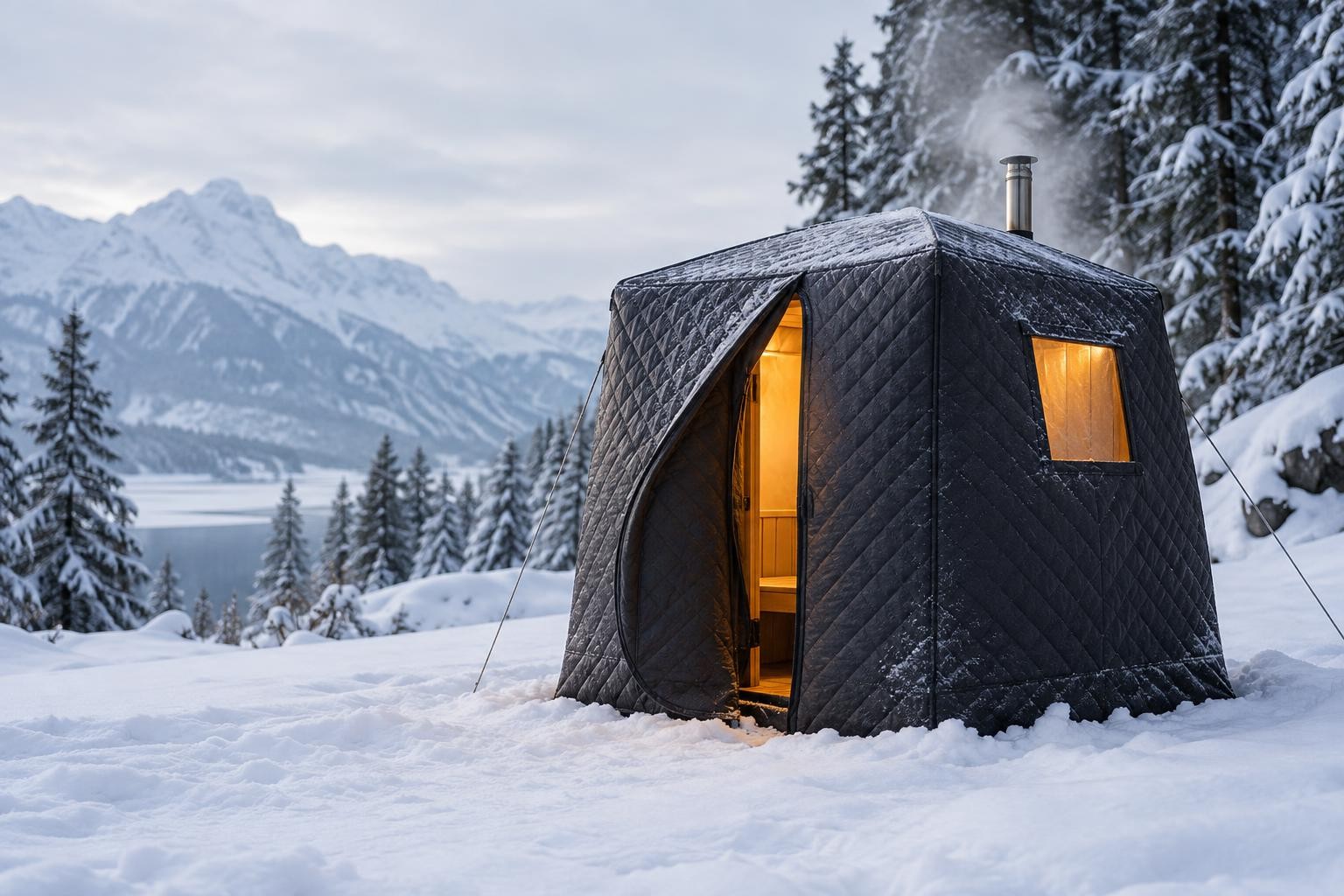
I would give a qualified yes to the question, are portable saunas effective in colder climates or outdoor use? The right unit can provide substantial warmth in winter. But portability does not mean weather…
Educational information, not medical advice. This analysis explains evidence and context; it does not provide an individualized heat-exposure plan.
Evidence status: Evidence reviewed. Duration, temperature, health history, medications, and individual response can change what is appropriate.
The bottom line / Evidence
The bottom line
Read the full article for the evidence, assumptions, and limits behind the answer. A lower or higher number is not meaningful without the heater type, heat load, and the person using it.
I would give a qualified yes to the question, are portable saunas effective in colder climates or outdoor use? The right unit can provide substantial warmth in winter. But portability does not mean weather resistance, and an inexpensive tent designed for a heated bedroom may struggle on a freezing patio. From a Minneapolis perspective, a sheltered autumn evening and a windy January morning are different buying requirements.
My clinical starting point is equally important: getting hot does not prove that a device reproduces the cardiovascular benefits reported in traditional sauna research. I would judge a winter setup by whether it delivers tolerable, consistent heat, operates within its instructions, and is practical enough to use regularly.
This article contains affiliate links. As an Amazon Associate, HeatDepth earns from qualifying purchases.
1. What does “effective” actually mean?
There are two questions: can the equipment warm you adequately, and will using it improve your health? The first depends on construction, heater output, weather, and setup. The second requires evidence about a particular exposure and outcome. A tent that makes you sweat has demonstrated heating capability, not disease prevention.
The frequently cited 2015 Finnish cohort study in JAMA Internal Medicine followed 2,315 middle-aged men and found associations between more frequent sauna bathing and lower cardiovascular and all-cause mortality. It was observational, so it could not establish that sauna use caused those differences. It was not a trial of portable steam tents on winter patios.
A 2018 systematic review of dry sauna bathing included 40 studies with 3,855 participants, but only 13 randomized controlled trials; most studies were small. Its eligibility criteria excluded high-humidity steam exposures and partial-body heating. That limits how confidently we can transfer its findings to steam tents and head-out enclosures.
My clinical judgment: buy for a comfortable, repeatable heat experience, not a promised lifespan extension. Research is encouraging, but matching a published air temperature does not establish an equivalent treatment. There is no validated winter portable-sauna prescription that guarantees cardiovascular benefit.
2. Why cold weather exposes weak designs
A sauna loses heat through its walls, floor, ventilation, and door openings. Its heater must replace that heat to maintain temperature. Colder surroundings increase the temperature difference driving heat loss; wind adds cooling and can push air through gaps. Thin fabric and a cold supporting surface make those losses harder to overcome.
Longer preheating sometimes helps, but only up to a point. If heat escapes as quickly as the heater supplies it, the temperature plateaus. Waiting another half-hour cannot turn an undersized heater into a larger one. Do not compensate by blocking required vents, adding an unapproved heater, or draping household blankets over equipment.
Steam and infrared need different expectations
Steam tents create humid heat. High humidity limits sweat evaporation, so lower air temperatures can still feel intense. Cold walls encourage condensation, making drainage and drying important. A wet body is not a useful measurement of heat absorbed: some moisture may be condensed steam.
Infrared units deliver radiant energy to exposed surfaces, so air temperature alone does not capture the experience. Nevertheless, drafts and cold surroundings still matter, along with panel position and distance from your body. “Heats the body directly” does not establish equivalent performance at every outdoor temperature.
My clinical judgment: consistent, tolerable exposure matters more than the highest display reading. Steam tents, infrared enclosures, and dry saunas should not share one temperature target. Chasing traditional dry-sauna temperatures in a humid enclosure can create excessive heat stress.
3. Which portable sauna makes sense for winter?
This comparison is a practical starting point, not an outdoor certification. The exact model’s manual takes priority over its category, promotional photographs, or product name.
| Type | Cold-weather expectation | Main tradeoff | Buying implication |
|---|---|---|---|
| Plug-in steam tent | Thin walls may lose substantial heat; outdoor suitability varies | Condensation, water handling, electrical exposure | Prefer indoor use unless the entire system explicitly permits your outdoor conditions |
| Portable infrared enclosure | Radiant heating can feel warm at lower air temperatures; drafts still matter | Many models require a protected, temperature-controlled room | Check the manual before planning porch or garage use |
| Insulated outdoor tent with matched wood stove | Can provide stronger winter heating when properly designed and operated | Fire, combustion gases, chimney setup, supervision | Choose a purpose-built system and follow ventilation and clearance instructions |
| Sauna blanket | Contains heat near the body in an appropriate indoor space | Different from sitting in a sauna; contact-heat precautions apply | Consider for indoor convenience rather than outdoor-room use |
Manufacturer guidance illustrates the distinction. SAUNABOX describes its infrared portable sauna as an indoor product that is not weatherproof. SaunaSpace specifies a temperature-controlled space protected from the elements. Those statements apply to the products described, not every sauna sold by either company.
For frequent winter sessions, I would favor an appropriate indoor location for a plug-in portable unit. If outdoor use is essential, start with equipment explicitly designed for it. A roof alone does not resolve freezing temperatures, wind-driven precipitation, or electrical limitations.
4. Does a portable sauna need special electrical setup?
Many compact saunas use a household outlet, but not every nearby outlet is suitable. Read the nameplate for voltage, wattage, and current, then check the manual’s circuit requirements. For illustration, a 1,500-watt appliance at 120 volts draws approximately 12.5 amps. Sharing its circuit with other substantial loads may cause problems; an outlet’s appearance does not reveal everything connected to it.
The Consumer Product Safety Commission’s electrical safety guidance recommends GFCI protection outdoors and keeping cord-connected devices away from water. GFCI protection reduces shock risk, but does not make an indoor appliance weatherproof or prevent every overload. Have an electrician assess an uncertain circuit or install an appropriate receptacle where needed.
Follow the manufacturer’s extension-cord instructions. If cords are prohibited, an outdoor-rated cord does not override that prohibition. Avoid power strips, improvised adapters, and cords routed through puddles or pinched doorways. Stop using equipment if a plug becomes unusually hot or a breaker repeatedly trips; repeatedly resetting it is not troubleshooting.
Wood-fired tents avoid the electric heater’s power requirements but introduce combustion risks. Use the matched stove and chimney, preserve required ventilation, and respect combustible clearances. Never substitute a camping burner or charcoal appliance. The SaunaTent operating manual specifies outdoor use; a combustion-heated tent does not belong inside a garage.
5. What I would check before buying
Define your actual setting: the lowest intended operating temperature, wind exposure, distance from a suitable outlet, and where you will dry and store everything. Ask the seller for the manual and written operating-temperature limits. If outdoor approval or freezing-weather operation remains ambiguous, choose another location or product.
- Check the complete system. Outdoor suitability must cover the generator or heater, controller, wiring, and enclosure, not just tent fabric.
- Investigate insulation. Ask about wall and floor construction. Layer counts alone reveal little without materials and test conditions.
- Inspect seating and exit access. You need a stable seat, an easily opened door, and a clear route indoors.
- Plan for weather. Follow anchoring instructions and wind restrictions. Do not improvise a sealed shelter around equipment.
- Budget time for maintenance. Draining, drying, and storage matter as much as advertised assembly time.
A sauna thermometer and hygrometer rated for your enclosure’s conditions can help compare sessions. Follow its placement instructions and keep it away from direct steam discharge and heater surfaces. Household sensors may be unsuitable for condensing humidity. Readings describe the environment, not core temperature or a proven therapeutic dose.
For a wet exit area, a non-slip outdoor drainage mat may help if suitable for the surface and temperature. It does not make ice safe. Remove ice and keep your route dry before starting.
My clinical judgment: a stable seat and safe exit deserve priority over wellness accessories. These address immediate, plausible risks. Elaborate accessories do not establish greater health benefit.
6. A cautious first-session approach
Confirm that your location and weather meet the manufacturer’s instructions. Preheat as directed and observe whether the enclosure stabilizes. If it struggles, relocate an indoor-approved unit to an appropriate indoor space or postpone. Remaining inside indefinitely is not a sensible remedy for inadequate performance.
- Begin conservatively. For an otherwise healthy adult, an initial five-to-ten-minute exposure at a comfortable setting is a cautious trial, not a proven treatment dose. Follow stricter manufacturer limits and leave sooner if uncomfortable.
- Keep the exit accessible. Sit away from steam outlets and hot surfaces. Do not lock yourself in or use equipment that makes leaving difficult.
- Respond to symptoms. Leave for dizziness, nausea, headache, unusual weakness, or palpitations. Chest pain, fainting, confusion, or severe breathlessness require urgent medical attention.
- Cool down gently. Stand slowly, dry off, put on warm clothing, and return to shelter. A barefoot snow walk or cold plunge is unnecessary.
- Drain and dry safely. Let equipment cool, unplug electrical units, and follow cleaning instructions. Store water-containing components where they cannot freeze.
Arrive normally hydrated, keep water available, and avoid alcohol. Follow any prescribed fluid restriction rather than generic advice to drink extra. Pregnancy, heart disease, recurrent fainting, kidney disease, or impaired heat sensation warrant an individualized discussion before starting.
The CDC’s heat-and-medications guidance identifies medicines that can affect sweating, fluid balance, blood pressure, or heat tolerance, including diuretics and some cardiovascular and psychiatric drugs. This is general heat guidance, not a portable-sauna protocol. Ask your prescriber about your circumstances; do not stop medication to accommodate sauna use.
7. Frequently asked questions
Can I use a portable sauna below freezing?
Only when the complete system permits those conditions. There is no universal minimum operating temperature. Water can freeze inside steam-system components after use, and a tent’s ability to retain heat does not establish that its controller or generator tolerates freezing.
Will a garage work better than the backyard?
It may reduce wind exposure, but an unheated garage can still fall outside the operating range. Check temperature, moisture, clearances, and electrical suitability. Never operate a wood-burning sauna tent inside it, and never run a vehicle during sauna use.
Can I leave my portable sauna outdoors overnight?
Only if its instructions permit outdoor storage in those conditions. Permission to use a unit outside does not necessarily cover prolonged weather exposure. Drain water-containing parts as directed and dry the enclosure before packing it away to reduce moisture-related problems.
Does winter use require longer sessions?
No automatic increase is justified. Cold weather may lengthen preheating, but it does not create a medically established need for longer exposure. Address inadequate heating through the setup. The most useful winter sauna is one that works reliably within its instructions and remains manageable to use, dry, and store.
Safety is part of the protocol
Stop signals deserve attention.
Leave the heat if you feel unwell, dizzy, faint, nauseated, or develop a headache. Do not push through symptoms to complete a session. People who are pregnant, have cardiovascular or other relevant conditions, or take medications that affect heat response should ask a qualified clinician before sauna use.