
The evidence / The context
Does a Sauna Need Ventilation?
Yes, a sauna needs ventilation. I would treat a planned supply of fresh air, a working exhaust path, and a way to dry the room afterward as basic requirements before considering any wellness claims.…
Educational information, not medical advice. This analysis explains evidence and context; it does not provide an individualized heat-exposure plan.
Evidence status: Equipment meets context. Duration, temperature, health history, medications, and individual response can change what is appropriate.
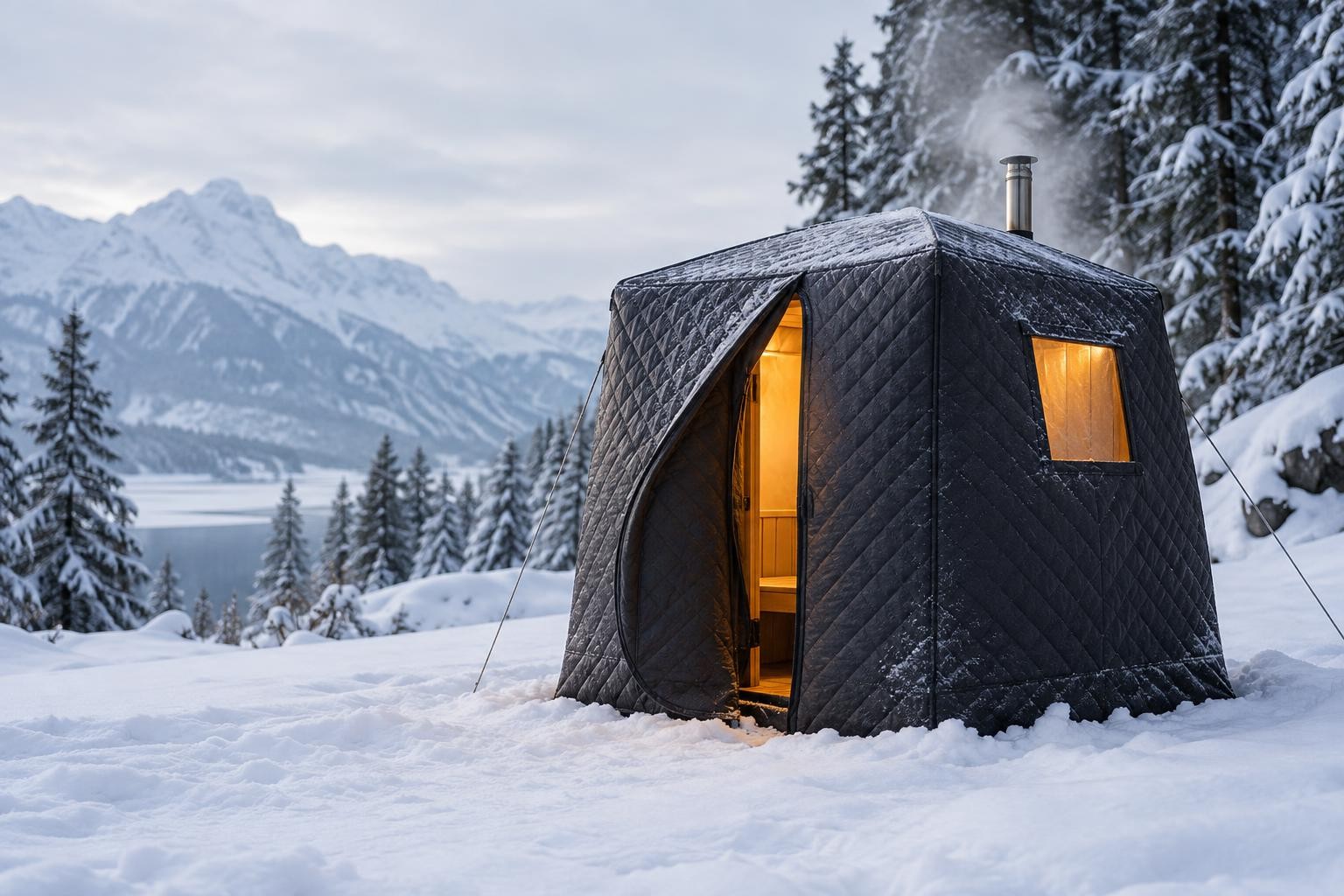
The bottom line / Evidence
The bottom line
Read the full article for the evidence, assumptions, and limits behind the answer. A lower or higher number is not meaningful without the heater type, heat load, and the person using it.
Yes, a sauna needs ventilation. I would treat a planned supply of fresh air, a working exhaust path, and a way to dry the room afterward as basic requirements before considering any wellness claims. A sauna should retain heat while exchanging air; sealing it tightly to chase a higher thermometer reading misses the point.
When I review the evidence, I separate three questions: does the room exchange air, does that air reach the people sitting inside, and does moisture leave after bathing? Research on sauna airflow helps answer those questions. It does not establish that a particular vent arrangement improves cardiovascular outcomes or makes longer sessions safe.
The practical answer: match the ventilation design to your specific heater, cabin, and building. Electric, wood-burning, and infrared saunas need different considerations. Two holes in a wall are not proof of adequate airflow.
What ventilation actually does for a sauna
Ventilation replaces indoor air with incoming air. Circulation moves air around within the room. A fan can improve circulation without bringing in any fresh air, so an accessory advertised as creating ?perfect airflow? may solve only part of the problem. Ask where replacement air enters and where used air ultimately goes.
People release carbon dioxide and moisture as they breathe; sweat and water poured onto suitable hot stones add moisture. Air exchange helps manage that load, while a well-designed flow path helps distribute heat. A room can reach its target temperature and still have a poorly ventilated seating area.
My clinical priority is tolerable heat exposure and a sound installation, not an ?oxygen-rich? marketing claim. Feeling lightheaded does not diagnose oxygen deprivation. It is a reason to leave the heat, not evidence that you should buy an airflow gadget and continue the session.
For an indoor installation, consider both the cabin and the surrounding room. Moving sauna air into a small, closed basement simply transfers moisture and stale air elsewhere. The building needs a suitable route for replacement air and moisture removal, designed around its existing ventilation.
What the ventilation research can?and cannot?tell us
A useful technical reference is the 1992 VTT report by Erkki ?ik?s and Rolf Holmberg, Temperature and ventilation of the Finnish sauna. The researchers examined vent placement, temperature distribution, and moisture distribution using mechanical exhaust ventilation. Bringing incoming air above the heater helped it mix with the hot air; a low exhaust helped draw that mixed air toward the lower part of the room.
The practical insight is that cooler supply air can fall toward the floor without mixing effectively. That matters especially when incoming air is very cold?a familiar design challenge in Minneapolis winters. Vent position affects where air travels, not merely how much enters.
However, these were engineering measurements, not a clinical trial comparing illness, blood pressure, or longevity. The findings support thoughtful airflow design in comparable systems. They do not justify copying one diagram into every sauna, particularly a passive system or a different heater configuration.
I would pay for a verified ventilation plan before paying for claims that ?optimized oxygen? increases sauna benefits. Better comfort is worthwhile on its own. It does not need an unsupported medical promise attached to it.
Where should sauna vents go?
Start with the installation manual supplied for your heater model and market, plus the cabin instructions. General manufacturer articles explain principles; they do not replace the model-specific requirements. If those documents conflict, resolve the conflict with the manufacturer and installer before cutting openings.
Electric saunas: distinguish mechanical from passive airflow
Harvia?s ventilation guidance places the supply high in the room for mechanical ventilation, but below or beside the heater for gravity ventilation. It places the exhaust low and away from the heater. An optional drying vent serves a separate purpose and is closed during heating and bathing. These are system-specific instructions, not a universal ?inlet low, outlet high? rule.
The heater?s temperature sensor is another constraint. Harvia warns against cooling it with incoming air. Preserve the specified sensor position and vent separation; do not relocate a sensor or bypass a safety limit to make an improvised layout work.
| Sauna setup | What the design must address | Question to ask before installation |
|---|---|---|
| Electric with mechanical exhaust | Controlled extraction and mixing through the occupied area | Where will replacement air enter when the fan runs? |
| Electric with passive ventilation | A working flow path driven by pressure and temperature differences | How will airflow be checked under actual operating conditions? |
| Wood-burning | Bather ventilation, combustion air, chimney draft, and drying | Could other exhaust fans interfere with the stove? |
| Infrared cabin | Manufacturer-designed openings and ventilation of the surrounding room | What room clearances and ventilation does this cabin require? |
Wood-burning saunas require combustion planning
A wood stove adds a second air demand: the fire. Its loading-door location also matters. HUUM?s ventilation guidance distinguishes stoves loaded inside the sauna from those loaded in an adjoining space, and warns that improperly designed mechanical ventilation can create negative pressure and dangerous carbon monoxide conditions.
Have the stove, flue, combustion-air supply, and building exhaust systems assessed together. Adding a powerful fan to cure stuffiness is not a sensible experiment around a wood fire. The installation needs to work when other relevant household fans are running, too.
Infrared cabins still need air exchange
Lower air temperatures and the absence of water on stones do not remove the need to ventilate an occupied enclosure. Keep the supplied openings unobstructed and follow the cabin?s room-placement instructions. Avoid drilling additional vents or installing a fan without manufacturer guidance; infrared cabins contain electrical components and are designed as complete assemblies.
How much airflow is enough?
Harvia specifies six air changes per hour for its electric-sauna guidance. Treat that as a manufacturer design reference, not a universal medical threshold or a guarantee of adequate ventilation at every occupancy.
To understand a proposal, use this arithmetic: airflow in cubic feet per minute = room volume in cubic feet ? air changes per hour ? 60. An 8 ? 6 ? 7-foot room contains 336 cubic feet. At six air changes per hour, the calculated airflow is approximately 34 CFM. In metric units, multiply cubic meters by air changes per hour to obtain cubic meters per hour.
That calculation describes room-volume turnover. It does not account for how many people are inside, whether air bypasses the benches, or whether duct resistance reduces the fan?s output. Four bathers create a different ventilation load from one person in the same cabin. The installer should consider occupancy as well as the applicable equipment instructions and requirements.
A fan?s advertised maximum airflow is not necessarily its installed airflow. Duct length, bends, grilles, and dampers all affect performance. Ask for the delivered airflow to be checked, rather than accepting the number on the box.
More extraction also carries a tradeoff: it removes heat and can increase heating demand or create drafts. Too little exchange leaves the system underperforming. The target is a documented, functioning design, not the largest fan available.
Moisture control continues after you leave
A ?dry sauna? still receives moisture from people, cleaning, and often water on stones. Once surfaces cool, retained moisture becomes a building-maintenance issue. EPA guidance identifies moisture control as the key to preventing indoor mold; sauna heat is not a substitute for drying.
I care more about whether the room dries reliably than whether the timber is advertised as naturally antimicrobial. Persistent dampness deserves investigation regardless of the wood species or the cabin?s price.
- Remove wet towels and take out removable mats so the surfaces beneath them can dry.
- Remove standing water and clean surfaces according to the cabin manufacturer?s instructions.
- Use the specified post-session ventilation or drying setting. Open designated drying vents as instructed.
- Check benches, floor edges, and the adjoining room after cooldown. Persistent dampness, condensation, or musty smells warrant troubleshooting.
For an indoor sauna, humid air needs a suitable discharge route. EPA?s bathroom ventilation guidance emphasizes exhausting outdoors rather than into an attic or another enclosed building space. That moisture-management principle matters when a sauna uses an adjoining washroom as part of its ventilation route.
A basic digital indoor hygrometer can help track humidity in the surrounding room before and after use. Keep ordinary electronics out of the hot cabin unless their operating specifications explicitly permit that environment. Room humidity trends are useful context, not proof that hidden construction layers are dry.
As an Amazon Associate, HeatDepth earns from qualifying purchases.
What to check before buying or modifying a sauna
Request a drawing showing the inlet, exhaust, drying provision, heater, sensor, benches, and final discharge location. A salesperson saying ?the door gap handles ventilation? is not enough; that gap must be part of a complete, specified airflow path.
- Equipment compatibility: fan, duct, grille, and control ratings must suit their actual temperature and moisture exposure.
- Building integration: identify replacement-air sources, discharge locations, and interactions with combustion appliances.
- Construction details: preserve the intended insulation and vapor-control layers around penetrations.
- Verification: establish how airflow, controls, and post-session drying will be checked.
- Maintenance: ensure grilles, screens, and serviceable components remain accessible for cleaning.
For an existing sauna, begin with unobstructed vents and the correct control settings. If performance remains poor, have the installer assess the system before enlarging openings. A generic bathroom or duct fan is not automatically suitable just because its diameter fits.
I would also ask how the setup performs in different seasons. A passive system that seems acceptable on one windy day may behave differently in still weather. A useful handover explains normal operating settings and signs that the system needs attention.
Symptoms are a reason to stop, not adjust vents mid-session
Headache, nausea, weakness, and dizziness can occur with heat illness. The CDC?s heat-illness guidance recommends moving to a cool place and cooling down; confusion or loss of consciousness requires emergency help. Do not stay seated while someone experiments with fan speed. Seek prompt care if symptoms worsen or do not resolve.
Wood-burning installations add a particular concern: carbon monoxide, which is odorless and can cause headache, dizziness, nausea, and confusion. If CO exposure is suspected, everyone should leave for outdoor fresh air and call emergency services. Do not re-enter until responders say it is safe. See the CDC?s carbon monoxide overview and emergency response guidance.
Use appropriately installed CO alarms according to local requirements and the alarm manufacturer?s temperature, humidity, and placement limits. A carbon dioxide monitor does not detect carbon monoxide. Neither type of monitor turns an unsuitable installation into a safe one.
Frequently asked questions
Does a sauna need ventilation if it is outdoors?
Yes. Outdoor placement does not guarantee air exchange inside an enclosed cabin. It still needs an appropriate supply and exhaust path, plus drying provisions. Weather exposure also makes screens and openings worth checking for obstruction.
Can I just open the door between rounds?
Opening the door exchanges some air, but it does not establish continuous ventilation while the door is closed. Use it as a supplement to the designed system. For indoor cabins, remember that released moisture enters the surrounding room.
Should the exhaust vent be high or low?
It depends on the complete system. A bathing exhaust and a high drying vent can serve different functions. Follow the applicable heater and cabin diagram rather than choosing an exhaust height from a general rule about hot air rising.
Can I close the vents to make the sauna hotter?
Do not close required ventilation to compensate for disappointing temperatures. Follow the specified vent settings and have heater sizing, insulation, controls, and airflow checked. A sauna that reaches temperature only when its intended ventilation is defeated needs troubleshooting.
Safety is part of the protocol
Stop signals deserve attention.
Leave the heat if you feel unwell, dizzy, faint, nauseated, or develop a headache. Do not push through symptoms to complete a session. People who are pregnant, have cardiovascular or other relevant conditions, or take medications that affect heat response should ask a qualified clinician before sauna use.